The timing of this development is not specified in the provided information, but the signal is already clear: the rapid growth of refillable skincare jar sets on TikTok Shop in Vietnam is no longer only a product trend. It also points to rising practical requirements around packaging standards, material certification, and specification alignment for exporters, packaging suppliers, distributors, and compliance service providers working on refill-based cosmetic systems.
What the disclosed sales momentum actually confirms
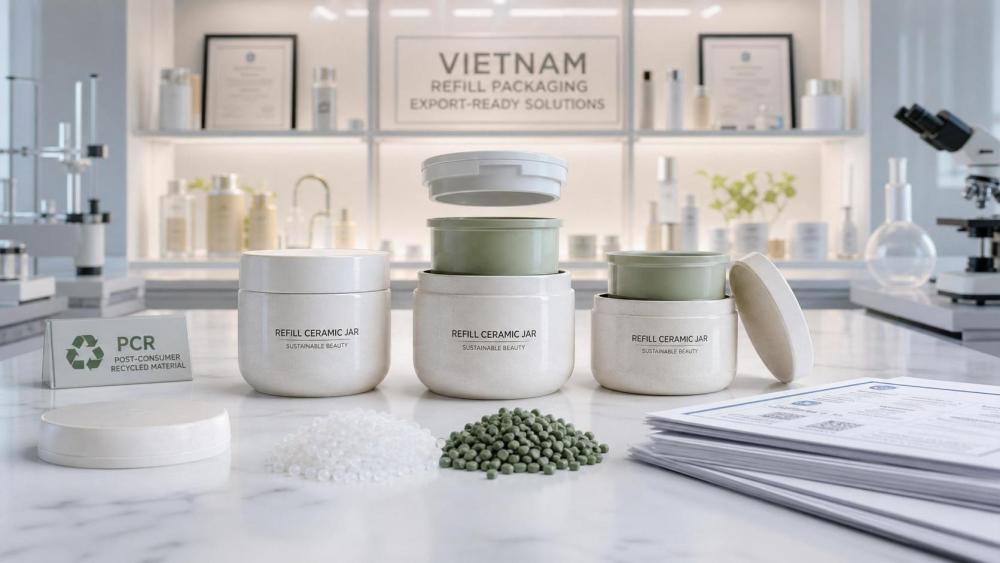
According to information disclosed by Guangzhou Huanya, its SIGHTFUTURE brand exported to Vietnam recorded year-on-year sales growth of two times during the 6.6 promotion period. The core driver described in the disclosure was a combination set built around replaceable inner pods and ceramic outer jars, namely a Refillable Cosmetic Jars design structure.
The same disclosure indicates that consumer acceptance in Vietnam toward an environmentally oriented repurchase model exceeded expectations. It also states that leading local beauty distributors have already approached Chinese suppliers for joint development of customized refill systems, with requirements for compatibility with ISO 8317 child-resistant closures and PCR recycled material certification.
Why the supply chain is now dealing with more than a packaging preference
Exporters are facing specification-led demand
From an industry perspective, exporters may be affected first because the product opportunity is now being tied to explicit technical and certification-related conditions. The immediate impact is likely to appear in quotation preparation, sample confirmation, product specification alignment, and contract discussions, especially where refill systems must be developed to match buyer-side compliance expectations rather than standard stock packaging.
Packaging manufacturers may need earlier compliance coordination
For packaging and processing manufacturers, the disclosed requirement for ISO 8317 compatibility and PCR certification suggests that design work, component selection, and material sourcing may need to be checked earlier in the development cycle. What deserves closer attention is whether refillable structures, closure performance, and recycled material claims can be supported consistently in technical files and supply documentation.
Distributors and buyers may tighten procurement conditions
Channel distributors and procurement teams may also be affected because refill systems are not being treated only as a marketing format. Observably, they are becoming part of purchasing criteria. This can influence supplier screening, bid or specification documents, acceptance standards, and post-delivery quality review, especially where packaging safety and recycled material positioning are being included together.
Testing and certification service providers may see more targeted requests
Certification-related firms and testing service providers may be drawn in at an earlier stage as brands and suppliers try to verify closure compatibility and material claims before commercialization or larger procurement commitments. The operational impact is likely to center on document preparation, test coordination, claim substantiation, and communication between packaging developers and downstream buyers.
What companies should watch in current execution
Check whether technical claims can be documented
Analysis shows that companies involved in refillable cosmetic packaging should pay close attention to whether product descriptions, sample specifications, and supporting documents can clearly match buyer requests related to ISO 8317 compatibility and PCR material certification. If the technical basis is incomplete, the commercial opportunity may face delays at the sampling or approval stage.
Review procurement and supplier qualification paths
Where refill systems are being jointly developed, supplier qualification may become more detailed than for conventional cosmetic jars. Companies should closely review how material sources, component consistency, and supporting records are managed, because these factors can affect procurement confidence and later delivery acceptance.
Prepare for longer coordination across delivery stages
Analysis shows that refill systems can create additional coordination points across packaging design, production scheduling, document collection, and customer confirmation. Even without a disclosed formal rule change, businesses should watch for requests that link packaging structure, closure performance, and recycled content evidence within the same delivery package.
Track how buyer language evolves
The disclosed invitation for joint development is important because buyer wording often becomes an early execution signal. Companies should monitor whether future requests, specification sheets, or commercial documents place greater emphasis on refill compatibility, child-resistant closure alignment, and PCR-related proof, rather than treating these as optional add-ons.
How this should be read at this stage
Observably, this development is better understood as an execution signal from the market rather than proof of a fully standardized regulatory shift. The confirmed facts show that refillable cosmetic jar systems are gaining traction in a cross-border sales setting and that at least some downstream buyers are already connecting demand with ISO 8317 compatibility and PCR certification expectations.
At the same time, analysis shows that the industry should avoid overstating the conclusion. The provided information does not establish a new law, a formal regulatory deadline, or a universal market rule. What deserves closer attention is whether these packaging and certification requirements continue to appear in procurement language, technical documents, and buyer-side development requests.
What this signal means for the next phase
In practical terms, this case points to a shift in how refillable packaging may be evaluated in export beauty business: not only by appearance or sustainability messaging, but also by verifiable closure standards and recycled material credentials. It is more appropriate to understand this as an early but concrete sign that compliance-linked packaging design is moving closer to the commercial front end.
A neutral reading is therefore necessary. The disclosed sales result and development requests are meaningful for market execution, but the broader industry impact still depends on whether similar requirements become more common in sourcing documents, certification review, and downstream acceptance practice.
Basis of this article and what still needs verification
This article is generated based on the user-provided news title, event timing, and event summary. The specific official source link was not provided in the input. For developments of this kind, commonly relevant source types may include official notices, regulator publications, customs or trade authority information, industry association updates, standard organization documents, and reporting by established professional media.
Further verification is still needed regarding any later policy detail, certification enforcement interpretation, procurement document changes, market feedback, and actual implementation by enterprises in the supply chain. Until more formal source material is available, the current development is best tracked as a market and compliance signal that warrants continued observation.
Recommended News
 Pico-second Laser SystemsHow to Evaluate Commercial Picosecond Lasers for Multi-Service Aesthetic ClinicsCommercial salon lasers picosecond: evaluate wavelengths, skin-type suitability, workflow, safety, and supplier support to choose a profitable multi-service clinic platform.Sep 13, 2026Author:
 FDA Aesthetics & Safety RegsHow to Qualify a Collagen Induction Therapy Supplier for Professional ClinicsChoose a collagen induction therapy supplier with confidence—compare device specs, sterile cartridges, compliance, training, and service to protect clinic performance.Sep 12, 2026Author:
 Refillable Cosmetic JarsWhat a Beauty Packaging Sustainability Report Should Measure Beyond RecyclabilityBeauty packaging sustainability report: explore metrics beyond recyclability, from PCR traceability and product protection to refill performance, transport efficiency, compliance, and credible lifecycle decisions.Sep 11, 2026Author:
 Coanda Air StylersDo Ionic Air-Wrap Styling Tools Reduce Frizz Without Excess Heat?Air-wrap styling tools ionic technology can help reduce frizz, smooth flyaways, and style hair with controlled airflow and less reliance on excess heat. Learn what really works.Sep 10, 2026Author:
 FDA Aesthetics & Safety RegsCE Compliance for Cosmetic Devices: Essential Safety Standards and Technical FilesCosmetic device safety standards CE: learn how classification, risk-based testing, technical files, claims, and change control build credible EU compliance.Sep 09, 2026Author:
 FDA Aesthetics & Safety RegsBuying Salon Equipment in the USA: A Checklist for Safety, Warranty, and ServiceSalon equipment USA buying checklist: verify safety documentation, warranty coverage, local service, installation needs, and total ownership costs before you invest.Sep 09, 2026Author:
 Multi-polar RF Anti-agingHow RF Anti-Aging Technology Uses Controlled Heat for Skin RejuvenationRF anti-aging technology uses controlled heat, smart electrode design, and cooling to support firmer-looking skin. Explore how safe, precise RF rejuvenation works.Sep 07, 2026Author:
 FDA Aesthetics & Safety RegsHow Much Does CE MDR Certification Cost? A Budget Guide for Medical Device CompaniesCE MDR certification cost explained: uncover key budget drivers, hidden lifecycle expenses, and smart planning steps for medical device market entry.Sep 07, 2026Author:
 Ceramic Flat IronsHeat Control in Electric Hair Care Appliances: Accuracy, Sensors, and SafetyElectric hair care appliances heat control: explore temperature accuracy, sensor placement, airflow response, and layered safety for reliable styling performance.Sep 05, 2026Author:
 IPL Skin RejuvenationHow to Choose a Collagen Regeneration Serum for Sensitive, Aging SkinChoose a collagen regeneration serum for sensitive, aging skin with confidence. Discover gentle actives, barrier-supporting ingredients, and smart tips for smoother-looking skin.Sep 04, 2026Author:
 Magnetic Sonic ToothbrushesWhat Makes an Electric Oral Care Device Truly Waterproof for Daily Use?Electric oral care waterproof protection explained: compare IP ratings, sealed designs, charging safety, and daily-use tips to choose a reliable device.Sep 03, 2026Author:
 FDA Aesthetics & Safety RegsWhat to Expect from Professional Tattoo Removal: Sessions, Safety, and AftercareProfessional tattoo removal explained: learn about sessions, laser safety, realistic results, and essential aftercare for a confident treatment journey.Sep 02, 2026Author:
 Coanda Air StylersHow to Evaluate a Personal Care Appliance Manufacturer for OEM ProjectsPersonal care appliance technology manufacturer selection made easier: explore OEM engineering, quality control, compliance, supply chain, and customization factors for reliable launches.Sep 01, 2026Author:
 Pico-second Laser SystemsHow to Evaluate Commercial Laser Platforms for Multi-Application Aesthetic ClinicsCommercial laser platforms: evaluate clinical fit, safety, regulatory status, cooling, workflow, and ownership costs for a high-performing multi-application aesthetic clinic.Aug 30, 2026Author:
 Multi-polar RF Anti-agingHow RF Skin Tightening Works and What Results Can You Realistically Expect?Non-invasive beauty treatments RF explained: learn how RF skin tightening works, the results you can realistically expect, key safety factors, and how to choose the right device.Aug 29, 2026Author:
 Beauty Capital & DTC MarketingAesthetic Device Market Analysis: Pricing Trends, Margins, and Buyer DemandAesthetic device market analysis pricing insights: compare cost drivers, margins, buyer demand, compliance, and supplier value for smarter sourcing decisions.Aug 28, 2026Author:
 Beauty Capital & DTC MarketingBeauty Device Sourcing: How to Vet Manufacturers for Quality, Compliance, and MOQBeauty device sourcing manufacturers: learn how to verify quality systems, compliance evidence, MOQ structures, and change control to source reliable, scalable beauty devices.Aug 27, 2026Author:
 Multi-polar RF Anti-agingHow to Evaluate RF Facial Devices for Wrinkle Reduction at HomeRF facial devices wrinkle reduction starts with smart evaluation. Learn how to compare safety, heat control, usability, and real results before choosing an at-home device.Aug 26, 2026Author:
 FDA Aesthetics & Safety RegsHow to Start Beauty Device Export Trade in the UAE: Licenses, Compliance, and Channel RisksBeauty device export trade UAE starts with licenses, compliance, and channel control. Learn how to avoid customs delays, claim risks, and distributor mistakes before launch.Aug 25, 2026Author:
 Coanda Air StylersHow to Evaluate a Coanda Air Styler Factory Before OEM/ODM Sourcing?Coanda air styler factory selection affects performance, compliance, and margins. Learn how to evaluate OEM/ODM suppliers, test samples, and avoid costly sourcing mistakes.Aug 24, 2026Author: